The Ultimate Guide to Mold Remediation in Texas: Laws, Costs, Licensure, and Consumer Rights
The Ultimate Guide to Mold Remediation in Texas: Laws, Costs, Licensure, and Consumer Rights
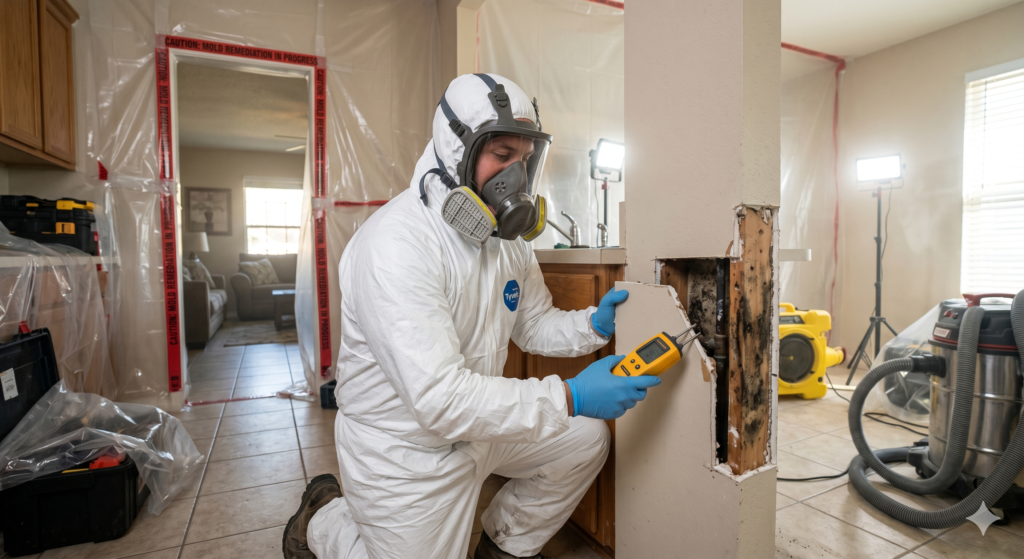
Discovering indoor mold growth can be incredibly stressful for any property owner. In the Lone Star State, the combination of intense coastal humidity, flash floods, and sudden plumbing failures creates a breeding ground for fungal spores. Consequently, understanding how mold remediation texas operates is crucial for safeguarding your health, your finances, and your real estate investments.
Texas stands completely alone in how strictly it regulates the indoor air quality industry. If you are dealing with a breakout, you cannot simply hire a random handyman to scrape off the spores. The state has enacted rigorous legislative frameworks to eliminate conflicts of interest and protect vulnerable consumers. Whether you are a homeowner trying to clean up after a major storm or a professional pursuing a career in environmental cleanup, navigating these local laws is paramount.
This comprehensive guide breaks down everything you need to know about mold remediation in texas. We will explore state regulations, realistic financial costs, tenant rights, and structural licensing protocols.
                              [ QUICK REFERENCE SUMMARY ]
+---------------------------------------------------------------------------------------+
|  • Governing Agency: Texas Department of Licensing and Regulation (TDLR)              |
|  • Legal Cut-off: Projects ≥ 25 contiguous sq. ft. require licensed professionals.     |
|  • The Golden Rule: The Assessor (Inspector) and Remediator MUST be separate companies. |
|  • Major Benefit: A Certificate of Mold Damage Remediation (CMDR) protects home value.  |
+---------------------------------------------------------------------------------------+
Who Manages Mold Remediation for the State of Texas?
When confronting severe property damage, property owners frequently ask: mold remediation for the state of texas is managed by whom?
Historically, these protocols fell under the jurisdiction of the Department of State Health Services (DSHS). However, the state reorganized its regulatory oversight to streamline enforcement. Today, all oversight for environmental cleanup is managed exclusively by the Texas Department of Licensing and Regulation (TDLR).
The TDLR enforces a specific set of rules known as the Texas Mold Assessment and Remediation Rules (TMARR). These rules are codified under the Texas Occupations Code, Chapter 1958. This agency ensures that every licensed mold remediation contractor texas adheres to rigorous safety parameters. Furthermore, the TDLR protects citizens by maintaining an updated database of active licenses, investigating consumer complaints, and issuing administrative penalties against uncertified individuals who perform illegal cleanups.
Texas Mold Remediation Laws: The Assessor-Remediator Separation
The most crucial element of mold remediation texas law is the mandatory separation of professional roles. In many states, a single company can inspect your home, tell you that you have a massive toxic hazard, and then charge you thousands of dollars to fix it. Texas lawmakers recognized that this setup creates an obvious, dangerous conflict of interest.
       [ THE TEXAS REGULATORY WALL ]
+-------------------------+      +--------------------------+
|  MOLD ASSESSMENT        |      |  MOLD REMEDIATION        |
|  COMPANY (Inspection)   | ===> |  CONTRACTOR (Cleanup)    |
|  • Runs lab diagnostics |      |  • Sets up containment   |
|  • Writes Protocol      | [X]  |  • Removes toxic waste   |
+-------------------------+  |   +--------------------------+
                             v
             [ STRICT LEGAL SEPARATION ]
       (Same entity cannot perform both roles)
Accordingly, under the texas mold remediation rules, a single entity is strictly prohibited from performing both mold assessment and mold remediation on the same project.
The Mold Assessment Consultant (MAC): This professional inspects your property, performs air or surface sampling, and drafts a formal mold remediation protocol texas. Highly recognized diagnostic authorites like Mold Inspection Sciences Texas specialize strictly in this assessment phase.
The Mold Remediation Contractor (MRC): This professional reviews the written protocol, executes the physical containment, and extracts the contaminated materials.
Because these two roles cannot cross paths, you are fully insulated against fraudulent diagnostics. The person identifying the problem has no financial incentive to expand the cleanup scope, while the person performing the cleanup must strictly follow the independent instructions provided by the assessor.
When is Mold Remediation Required in Texas?
You might wonder: when is mold remediation required in texas by a licensed professional? The legislative trigger is known as the Minimum Area Exemption.
If the visible mold contamination on a property affects a total surface area of less than 25 contiguous square feet, you are legally permitted to clean it up yourself or hire an uncertified technician. However, if the contamination measures 25 contiguous square feet or more, the law mandates that a licensed professional handle the project. For accurate health safety data regarding internal spore proliferation thresholds, refer to the U.S. Centers for Disease Control and Prevention (CDC) Mold Guide.
The Certificate of Mold Damage Remediation (CMDR)
Completing a large-scale remediation project is only half the battle. To ensure the property retains its underlying market value, you must obtain a certificate of mold remediation texas. This document is officially referred to as the Certificate of Mold Damage Remediation (CMDR), or Form PC326 MDR-1.
   [ THE PATH TO A VALID CMDR CERTIFICATE ]
+----------------------------------------------------+
| Step 1: Licensed Assessor writes the Protocol      |
+----------------------------------------------------+
                         │
                         ▼
+----------------------------------------------------+
| Step 2: Licensed Contractor performs remediation   |
+----------------------------------------------------+
                         │
                         ▼
+----------------------------------------------------+
| Step 3: Independent Assessor runs Clearance Tests  |
+----------------------------------------------------+
                         │
                         ▼
+----------------------------------------------------+
| Step 4: BOTH sign and issue the official CMDR      |
+----------------------------------------------------+
A CMDR can only be issued if an independent Mold Assessment Consultant performs a comprehensive post-remediation clearance evaluation. This evaluation involves visual inspections and indoor air sampling to verify that the environment has returned to safe background levels. Once the project passes clearance, the remediation contractor and the assessment consultant both sign the certificate. They must deliver this document to the property owner within 10 days of project completion.
The 5-Year Real Estate Disclosure Rule
Why is the certificate of mold damage remediation texas so critical for property owners? The answer lies within the Texas property code.
If you sell a residential or commercial building in Texas, you are legally required to disclose any past history of water damage or fungal contamination. However, if you possess a valid CMDR, the law protects you. You only have to disclose certificates issued within the preceding five years.
If a buyer looks at a home that had major flooding four years ago, a valid CMDR provides absolute proof that the problem was resolved by certified experts. Consequently, it prevents the home’s value from plummeting. Without this certificate, real estate transactions frequently collapse because buyers and mortgage companies view the property as an ongoing environmental hazard.
Understanding Mold Remediation Costs in Texas
Financial planning is a major concern when property damage strikes. Most property owners immediately search for how much does mold remediation cost in texas or try to calculate the average cost of mold remediation in texas.
Because every home and water intrusion event is distinct, pricing varies dramatically based on square footage, accessibility, and the structural materials involved.
              [ ESTIMATED REMEDIATION PRICING ]
+------------------------+----------------------------------+
| Remediation Scale      | Average Cost Range (USD)         |
+------------------------+----------------------------------+
| Minor Crawlspace Leak  | $1,500 – $3,500                  |
| Single Room / Bathroom | $2,500 – $6,000                  |
| Multi-Room Structural  | $7,000 – $15,000                 |
| Whole-House Flooding   | $20,000 – $40,000+               |
+------------------------+----------------------------------+
The underlying mold remediation cost texas parameters depend on specialized equipment and labor. Contractors must establish negative-pressure air containment zones using thick plastic sheeting and commercial HEPA air scrubbers. This setup prevents toxic spores from migrating into unaffected bedrooms or living areas during structural demolition. Furthermore, drywall, insulation, and carpeting that have absorbed water are categorized as hazardous waste and must be disposed of according to texas mold remediation regulations.
Who Pays for Mold Remediation in Texas?
Another common source of anxiety is determining who pays for mold remediation in texas. The answer depends entirely on your legal relationship to the property and the origin of the moisture source.
For Homeowners: Regular homeowners insurance policies frequently exclude gradual mold damage caused by slow pipe leaks, poor ventilation, or lack of maintenance. However, if the fungal growth was directly triggered by a sudden, accidental plumbing burst or a storm covered by your policy, insurance companies will typically foot the bill.
For Tenants and Landlords: Under Texas Property Code §92.052, landlords maintain a strict statutory duty to repair any condition that materially affects the physical health or safety of an ordinary tenant. If water leaks from a broken roof or a structural pipe, the landlord is fully responsible for covering the cost of mold remediation in texas. Tenants seeking professional mediation advice or information regarding their legal rights can consult the Texas Tenant Advisor Mold Framework for guidance on filing written structural requests.
Consumer Protection and Hiring a Licensed Contractor
Because the aftermath of major natural disasters can attract fraudulent, uncertified operations, the state enforces rigid consumer safety laws. Prior to signing any binding service agreements, an MRC must provide you with a copy of the official TDLR Consumer Mold Information Sheet.
This document outlines your explicit legal rights. It explicitly states that a contractor cannot force you to use their preferred assessment consultant. It also lists the proper state channels for filing a regulatory grievance if the contractor fails to deliver professional-grade results.
To safeguard your family or business, you should never take a contractor’s word at face value. Instead, use the public TDLR Online License Search Database to ensure your team is legal and active.
               [ CONSUMER SAFEGUARDS CHECKS ]
+--------------------------------------------------------------+
| Check 1: Verify license on TDLR Search portal.                |
| Check 2: Confirm contractor provides the Consumer Notice.   |
| Check 3: Ensure company carries $1 million liability insurance.|
| Check 4: Refuse any provider offering to inspect AND clean.  |
+--------------------------------------------------------------+
By entering the company’s registration name, you can instantly verify if they are a truly licensed mold remediation texas operator. This search also reveals if they have open violations or a history of disciplinary actions. Additionally, verify that your chosen mold remediation contractor texas carries a minimum of $1 million in commercial general liability insurance, which is a mandatory statutory requirement for keeping an active license in the state.
Texas Mold Remediation License Requirements (For Professionals)
The high demand for environmental cleanup professionals makes the remediation industry a lucrative career path. However, learning how to get a mold remediation license in texas requires completing several rigorous steps to satisfy the TDLR. The state offers distinct pathways for workers, contractors, and corporate companies.
To fulfill the primary texas mold remediation license requirements for a full Contractor designation, an applicant must satisfy the following criteria:
Prerequisite Experience: You must possess either a high school diploma with five years of verifiable construction experience, an associate degree with three years of experience, or a bachelor’s degree in science or engineering paired with one year of allied field experience.
Formal Classroom Education: You must successfully complete an approved 40-hour texas mold remediation contractor course from an accredited training institution.
Background Screening: Applicants must submit fingerprint profiles and pass a comprehensive criminal history background check.
State Examination: You must achieve a passing score on the rigorous state licensing exam administered by PSI Services.
       [ LICENSING ROADMAP FOR PROFESSIONALS ]
+------------------+     +-------------------+     +------------------+
| Prerequisite     | ===> | 40-Hour Approved  | ===> | Pass TDLR State  |
| Construction Exp.|     | Training Course   |     | Licensing Exam   |
+------------------+     +-------------------+     +------------------+
                                                           │
                                                           ▼
+------------------+     +-------------------+     +------------------+
| Maintain Active  | <=== | Submit Formal     | <=== | Provide Proof of |
| $1M Insurance    |     | Application + Fee |     | $1M Liability Ins|
+------------------+     +-------------------+     +------------------+
Many candidates preparing for the official test search for online resources like the texas mold remediation contractor state exam quizlet decks to study state statutes, containment engineering, and personal protective protocols.
Once you pass the exam, you can finalize your texas mold remediation contractor license application by paying the mandatory state registration fees and uploading proof of your $1 million general liability policy. To keep your credentials active over time, you must also complete a mold remediation contractor refresher course texas every two years.
Regional Guide: Mold Remediation Across Lone Star Cities
Texas encompasses vastly distinct geographic and climatic ecosystems. As a result, properties face wildly different environmental hazards depending on their municipal location.
Mold Remediation Houston Texas
With its proximity to the Gulf of Mexico, Houston represents the highest volume market for indoor air quality services. The combination of ambient coastal humidity and structural damage from tropical storms makes mold remediation houston texas an ongoing necessity.
Local property owners frequently seek out the best mold remediation companies in texas to tackle complex structural restoration following major hurricanes. When looking for mold remediation companies in houston texas, prominent market leaders like Lone Star Pro Services offer highly rated, CIRS-focused structural mitigation. It is wise to select groups with deep local roots rather than temporary “storm chasers” who disappear as soon as initial demolition ends.
Mold Remediation Austin Texas
In contrast to the coastal plains, Central Texas deals with distinct environmental pressures. The search volume for mold remediation austin texas often spikes following intense spring flash-flooding events.
Austin’s unique limestone geography and older, historic crawlspace properties often require highly specialized moisture management systems to keep fungal spores from infiltrating indoor living spaces.
                  [ RECURRING CITY INFLUENCES ]
+----------------+--------------------------+-----------------------+
| Texas City     | Primary Climate Driver   | Main Vulnerability    |
+----------------+--------------------------+-----------------------+
| Houston        | Gulf Storms & Humidity   | Whole-House Flooding  |
| Austin         | Flash Floods & Limestone | Crawlspace Dampness   |
| Dallas         | Soil Shifts & Freezes    | Broken Internal Pipes |
| San Antonio    | Subtropical Air Influx   | HVAC System Condensation|
+----------------+--------------------------+-----------------------+
Mold Remediation Dallas Texas
North Texas features a drier climate, but local properties are highly susceptible to severe freeze-thaw cycles and intense shifting soils. Consequently, mold remediation dallas texas requests are frequently driven by slab foundation cracks that pinch plumbing lines or sudden burst pipes caused by winter freezes. For complex full-scale environmental hazards across industrial or residential properties, statewide specialists like RSB Environmental provide 24/7 disaster mitigation and spill recovery services throughout the Dallas-Fort Worth metroplex.
Secondary and Coastal Texas Markets
Other areas of the state present their own unique issues:
Mold Remediation San Antonio Texas: Property owners here frequently face issues caused by high subtropical humidity that overwhelms older residential HVAC systems.
Mold Remediation Corpus Christi Texas: This region experiences constant salt-air exposure and coastal wind-driven rain that forces moisture past exterior stucco and siding.
West Texas (Lubbock and Midland): While the climate is naturally arid, texas mold remediation lubbock and mold remediation midland texas inquiries still emerge regularly due to flat-roof commercial pooling or aging commercial infrastructure leaks.
East Texas (Tyler and Temple): Dense pine forests and heavy annual rainfall mean that mold remediation tyler texas and mold remediation temple texas projects require constant exterior drainage monitoring to prevent moisture from seeping into residential foundations.
Step-by-Step Homeowner Response Checklist
If you discover a sudden water leak or suspect a mold outbreak in your Texas property, acting quickly can save you thousands of dollars. Follow this structured protocol to handle the situation correctly:
Step 1: Identify and Stop the Moisture Source
Mold cannot survive without a consistent water source. Repair the plumbing leak, patch the roof damage, or divert exterior drainage away from your foundation immediately.
Step 2: Calculate the Scope of the Contamination
Estimate the total square footage of the visible fungal growth. If it appears close to or larger than a standard 4×8 sheet of drywall (32 square feet), remember that you are legally required to stop and hire a certified professional.
Step 3: Hire an Independent Mold Assessment Consultant (MAC)
Have a licensed inspector run air samples, determine the exact species of mold present, and write an official, unbiased mold remediation protocol texas.
Step 4: Solicit Bids from Licensed Contractors (MRC)
Provide the independent protocol to a fully certified mold remediation company license texas holder. Ensure they give you a clear, itemized quote based strictly on that protocol and provide you with the mandatory consumer protection notice.
Step 5: Execute and Clear the Project
The contractor will safely remove the contaminated materials within airtight containment zones. Once they finish cleaning, your independent MAC will return to run clearance testing and issue your official certificate of mold damage remediation texas.
Conclusion: Protect Your Health and Home Investment
Dealing with property damage is rarely simple, but the strict framework surrounding mold remediation texas ensures you are well protected throughout the restoration process. By insisting on a clear separation between your inspector and your cleanup crew, you protect yourself from predatory billing practices while ensuring your indoor air quality is returned to safe, healthy standards.
Never skip the clearance process or settle for uncertified handymen to handle large-scale water damage. Utilizing the texas mold remediation license search tool, confirming your contractor’s insurance, and securing a formal CMDR certificate protects your health and preserves your home’s long-term market value.
Frequently Asked Questions (FAQ)
What is the difference between a mold assessment and a mold remediation?
A mold assessment involves inspecting a property, taking air or surface samples, and writing a diagnostic protocol. Mold remediation is the actual physical cleanup, containment, and removal of the contaminated materials. Under Texas law, the same company cannot perform both roles on the same project.
Is it legal for a property owner to clean up mold themselves in Texas?
Yes. Under the homeowner exemption, you can remediate mold on your own residential property if it has fewer than 10 dwelling units. Additionally, anyone can clean up visible mold that covers less than 25 contiguous square feet without a license.
How do I check if a mold contractor is legally licensed in Texas?
You can instantly verify any professional’s credentials by visiting the official Texas Department of Licensing and Regulation (TDLR) website and using their public license search tool.
Does a Certificate of Mold Damage Remediation (CMDR) expire?
The certificate itself does not expire, but its real estate disclosure window is limited. By law, when selling a property, you are only required to provide buyers with copies of CMDRs issued during the preceding five years.
What should I do if a contractor offers to do both inspection and remediation?
Refuse the offer immediately. Except for a few very narrow institutional exemptions, offering to perform both mold assessment and mold remediation on the same commercial or residential project is a direct violation of Texas law.