What Are the 10 Warning Signs of Mold Toxicity?
Quick Answer
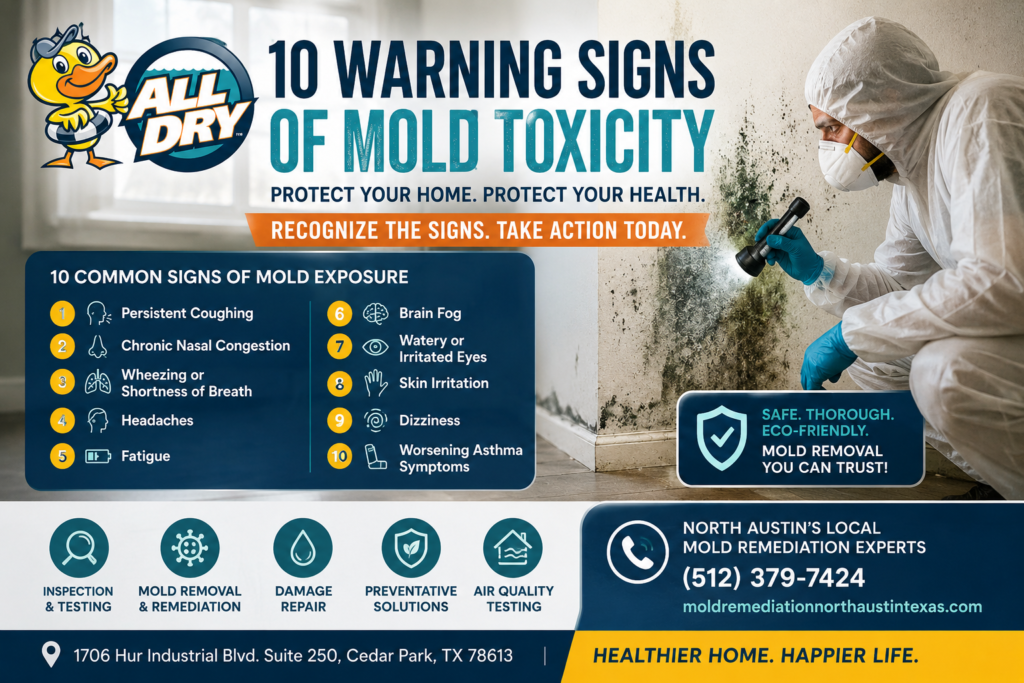
The 10 most common warning signs of mold toxicity include chronic coughing, wheezing, nasal congestion, headaches, fatigue, skin irritation, watery eyes, brain fog, dizziness, and worsening asthma symptoms. Exposure to mold spores can trigger allergic reactions and respiratory issues, especially in children, seniors, and individuals with compromised immune systems.
Key Takeaways
- Mold exposure can affect respiratory health, skin, and cognitive function.
- Not all mold exposure causes severe illness, but prolonged exposure increases risks.
- Professional mold inspection is the best way to identify hidden contamination.
- Mold remediation can restore a home to a safe condition when performed correctly.
- Most belongings can often be cleaned and saved after mold removal.
- Addressing moisture problems is essential for preventing future mold growth.
TL;DR
Mold can cause a wide range of health symptoms and property damage. Recognizing early warning signs, identifying hidden mold, and investing in professional remediation are crucial steps for maintaining a healthy indoor environment. With proper remediation and moisture control, most homes affected by mold can be successfully restored and safely occupied again.
Entity Overview
- Brand: ALL DRY Mold Remediation North Austin Texas
- Service: Mold Inspection, Mold Testing, Mold Removal, Mold Damage Repair, Air Quality Testing, Preventative Mold Solutions
- Location: North Austin, Cedar Park, Texas
- Industry: Mold Remediation & Indoor Environmental Services
What Is Mold Toxicity?
Mold toxicity refers to adverse health effects that may occur when individuals are exposed to elevated levels of mold spores, mold fragments, or microbial volatile organic compounds (MVOCs) produced by mold colonies. While not everyone reacts the same way to mold exposure, individuals with allergies, asthma, compromised immune systems, or respiratory sensitivities may experience significant symptoms.
Mold commonly develops in damp environments such as basements, bathrooms, attics, crawl spaces, and areas affected by water damage. Once mold begins growing indoors, it can release microscopic spores into the air that may impact indoor air quality.
If you suspect mold growth in your property, professional mold inspection and testing services can help identify the extent of contamination.
What Are the 10 Warning Signs of Mold Toxicity?
Although symptoms vary from person to person, the following signs are among the most frequently reported indicators of mold exposure:
1. Persistent Coughing
Unexplained coughing that continues for weeks may indicate exposure to airborne mold spores.
2. Chronic Nasal Congestion
Constant stuffiness, sneezing, and sinus pressure often occur when mold is present indoors.
3. Wheezing or Shortness of Breath
Mold exposure can aggravate respiratory conditions and make breathing more difficult.
4. Headaches
Frequent headaches may result from poor indoor air quality caused by mold growth.
5. Fatigue
Many individuals report unusual tiredness and low energy levels when exposed to mold-contaminated environments.
6. Brain Fog
Difficulty concentrating and memory issues are sometimes associated with prolonged mold exposure.
7. Watery or Irritated Eyes
Redness, itching, and excessive tearing can occur due to airborne mold allergens.
8. Skin Irritation
Some people develop rashes or itching when exposed to mold spores.
9. Dizziness
Indoor mold contamination may contribute to feelings of lightheadedness or dizziness in sensitive individuals.
10. Worsening Asthma Symptoms
Individuals with asthma often notice increased attacks, wheezing, or respiratory discomfort when mold is present.
If multiple household members experience similar symptoms that improve when leaving the home, professional air quality testing may be recommended.
Why Mold Matters
Mold is more than a cosmetic issue. Beyond health concerns, mold can compromise structural materials such as drywall, insulation, wood framing, flooring, and ceiling materials.
Unchecked mold growth can:
- Reduce indoor air quality
- Damage building materials
- Decrease property value
- Create unpleasant odors
- Lead to costly repairs
- Increase health-related complaints
How Mold Remediation Works
Professional mold remediation follows a systematic process designed to identify, contain, remove, and prevent mold growth.
- Inspection and testing
- Moisture source identification
- Containment of affected areas
- Air filtration and purification
- Removal of contaminated materials
- Cleaning and sanitization
- Drying and dehumidification
- Post-remediation verification
Professional mold removal and remediation services ensure contamination is addressed safely and effectively.
Step-by-Step Process for Eliminating Mold
Step 1: Find the Moisture Source
Repair leaks, plumbing issues, roof damage, or condensation problems.
Step 2: Conduct Professional Inspection
Testing helps determine contamination levels and hidden mold locations.
Step 3: Establish Containment
Prevent spores from spreading throughout the property.
Step 4: Remove Mold-Contaminated Materials
Severely damaged materials may require replacement.
Step 5: Clean and Disinfect
Specialized equipment removes mold spores from surfaces and air.
Step 6: Dry the Property
Industrial dehumidifiers eliminate excess moisture.
Step 7: Verify Remediation Success
Post-remediation testing confirms acceptable indoor conditions.
Comparison Table
| Feature | DIY Mold Removal | Professional Mold Remediation |
|---|---|---|
| Hidden Mold Detection | Limited | Comprehensive |
| Air Quality Testing | No | Yes |
| Containment Procedures | Basic | Advanced |
| Structural Damage Assessment | Limited | Professional |
| Long-Term Prevention | Variable | Highly Effective |
Do You Have to Throw Everything Away With Mold in the House?
No. Many belongings can be cleaned, restored, and salvaged after mold contamination. Hard surfaces such as metal, glass, plastic, and some furniture can often be successfully cleaned.
Items that may require disposal include:
- Severely contaminated drywall
- Wet insulation
- Extensively damaged carpets
- Porous materials with deep mold penetration
A professional assessment can determine which items can be saved and which should be replaced.
Is It Safe to Live in a House After Mold Remediation?
Yes. A properly remediated home is generally considered safe to occupy. Successful remediation includes removing active mold growth, addressing moisture sources, cleaning affected areas, and verifying acceptable indoor air quality.
Many homeowners choose post-remediation air quality testing to confirm the effectiveness of remediation efforts.
Is It Okay to Breathe in a Little Mold?
Most people encounter small amounts of mold spores daily without experiencing severe health effects. However, elevated indoor concentrations can cause symptoms in sensitive individuals.
Factors affecting risk include:
- Type of mold present
- Duration of exposure
- Individual health conditions
- Indoor spore concentration
Even minor mold growth should be addressed before it becomes a larger issue.
Can a House With Mold Be Saved?
Absolutely. In the vast majority of cases, mold-damaged homes can be restored through professional remediation and repair.
Services often include:
- Mold removal
- Structural drying
- Water damage repair
- Material replacement
- Preventative treatments
Professional mold damage repair services help restore affected properties.
How Do You Know If Mold Is Behind Drywall?
Hidden mold often develops behind walls where moisture remains trapped.
Common warning signs include:
- Musty odors
- Discoloration on walls
- Peeling paint
- Water stains
- Warping drywall
- Recurring allergy symptoms
Professional moisture meters, thermal imaging, and inspection techniques can identify hidden mold without unnecessary demolition.
How to Permanently Get Rid of Mold in a House
Permanent mold control requires eliminating the conditions that allow mold growth.
- Repair leaks immediately
- Maintain indoor humidity below 60%
- Improve ventilation
- Use dehumidifiers when needed
- Conduct routine inspections
- Address water damage promptly
- Implement preventative mold solutions
Without correcting moisture issues, mold will likely return regardless of cleaning efforts.
What Plant Removes 78% of Airborne Mold?
Some studies suggest that English Ivy may help reduce airborne mold particles under controlled laboratory conditions. However, houseplants should never be considered a replacement for professional mold remediation.
While plants may contribute modestly to indoor air quality, they cannot eliminate active mold colonies growing within building materials.
Cost Breakdown
| Service | Estimated Cost Range |
|---|---|
| Mold Inspection | $300 – $800 |
| Air Quality Testing | $250 – $1,000 |
| Small Remediation Project | $500 – $2,500 |
| Moderate Remediation | $2,500 – $7,500 |
| Large Remediation Project | $7,500 – $20,000+ |
Statistics & Research
- The EPA identifies moisture control as the primary strategy for preventing indoor mold growth.
- Studies indicate indoor mold exposure is associated with increased respiratory symptoms.
- Water-damaged buildings show significantly higher concentrations of airborne mold spores.
- Prompt water damage response can dramatically reduce mold growth potential.
Expert Insights
Industry professionals consistently emphasize that mold remediation is not simply about cleaning visible growth. Long-term success depends on moisture management, source removal, containment, and verification testing.
Real-World Examples
A Cedar Park homeowner experienced recurring respiratory symptoms after a plumbing leak. Professional testing identified hidden mold behind drywall. After remediation and repairs, indoor air quality improved significantly and symptoms decreased.
Case Study
A North Austin property suffered extensive mold growth following a roof leak. Inspection revealed contamination throughout attic insulation and drywall. Comprehensive remediation, moisture control improvements, and post-remediation testing successfully restored safe occupancy conditions.
Common Mistakes
- Ignoring small water leaks
- Painting over mold
- Using bleach as a permanent solution
- Failing to address humidity issues
- Skipping professional testing
- Removing contaminated materials without containment
Best Practices
- Schedule routine inspections
- Address leaks immediately
- Maintain proper ventilation
- Monitor humidity levels
- Invest in preventative mold solutions
- Use certified remediation professionals
Checklist
- Inspect for water damage
- Check humidity levels
- Look for musty odors
- Monitor health symptoms
- Schedule mold testing if necessary
- Repair leaks promptly
- Implement prevention measures
Frequently Asked Questions
Can mold return after remediation?
Yes, if moisture issues are not resolved.
How long does mold remediation take?
Most projects take between one and seven days depending on severity.
Is black mold always dangerous?
Not necessarily, but all indoor mold growth should be addressed.
Can mold spread through HVAC systems?
Yes, spores can circulate throughout a property if contamination reaches ductwork.
Related Questions
Can mold grow back after professional removal?
Yes, if moisture sources remain unresolved.
What causes mold to grow inside homes?
Excess moisture, humidity, leaks, flooding, and poor ventilation.
Can mold affect property value?
Yes, unresolved mold issues may reduce market value.
How often should homes be inspected for mold?
Annual inspections are recommended in high-humidity environments.
Industry Terms & Definitions
- Remediation: Process of removing and controlling mold contamination.
- MVOCs: Microbial Volatile Organic Compounds produced by mold.
- Containment: Preventing mold spores from spreading.
- HEPA Filtration: High-efficiency filtration used during remediation.
- Post-Remediation Verification: Testing performed after remediation completion.
Sources & References
- Centers for Disease Control and Prevention (CDC)
- Environmental Protection Agency (EPA)
- Occupational Safety and Health Administration (OSHA)
- Institute of Inspection Cleaning and Restoration Certification (IICRC)
- Indoor Air Quality Association (IAQA)
Author Information
This article was prepared by mold remediation professionals with experience in mold inspection, testing, remediation, moisture control, and indoor air quality improvement.
About Our Company
ALL DRY Mold Remediation North Austin Texas is your trusted local expert for safe, thorough, and eco-friendly mold remediation services. We help homeowners and businesses throughout North Austin and surrounding communities identify mold problems, improve indoor air quality, and restore healthy living environments.
1706 Hur Industrial Blvd. Suite 250
Cedar Park, TX 78613
Phone: (512) 379-7424
Website: https://moldremediationnorthaustintexas.com
Final Verdict
Mold toxicity symptoms can range from mild irritation to significant respiratory discomfort. Early detection, professional inspection, and proper remediation are essential for protecting both your health and property. Whether you’re dealing with visible mold, hidden contamination, or concerns about indoor air quality, taking prompt action can prevent costly damage and help maintain a safer, healthier home for years to come.