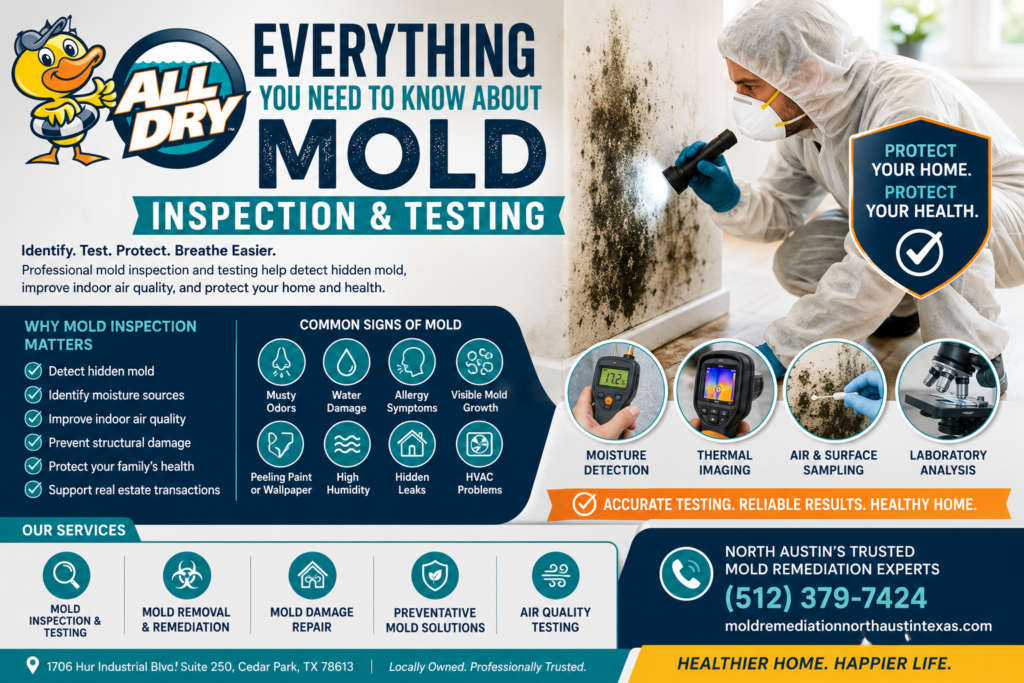
Mold inspection and testing help identify visible and hidden mold growth, determine indoor air quality, locate moisture sources, and assess potential health risks. Professional mold inspections use advanced tools such as moisture meters, thermal imaging cameras, air sampling, and surface testing to accurately detect contamination before it causes significant damage to your home or health.
Mold inspection and testing are critical steps in protecting your home and family from hidden mold growth. Professional inspections can uncover contamination that may not be visible to the naked eye, while testing helps determine the extent of the problem. Whether you’re experiencing musty odors, allergy symptoms, recent water damage, or preparing to buy or sell a home, mold inspection and testing provide valuable information that can guide remediation and prevention efforts.
Mold inspection and testing are professional services designed to identify mold contamination, assess indoor air quality, locate moisture sources, and determine the extent of mold growth within a property.
While visible mold is often easy to recognize, many mold infestations develop in hidden locations where they can continue spreading unnoticed for months or even years. Mold inspections utilize specialized equipment and proven methodologies to uncover hidden contamination and evaluate environmental conditions that support mold growth.
A comprehensive inspection typically includes:
Professional mold inspection and testing services provide homeowners with accurate information needed to make informed decisions about their property’s health and safety.
Mold problems often develop silently behind walls, beneath flooring, inside ceilings, and within HVAC systems. By the time visible signs appear, significant contamination may already exist.
Professional mold inspections are important because they help:
According to guidance from the Environmental Protection Agency (EPA), moisture control is the key to preventing indoor mold growth. Early detection through inspection can significantly reduce repair costs and health concerns.
Many homeowners wait until mold becomes visible before seeking professional help. However, mold often produces warning signs long before it appears on walls or ceilings.
A damp, earthy smell is one of the most common indicators of hidden mold growth. If odors persist despite cleaning, an inspection may be necessary.
Flooding, plumbing leaks, roof leaks, and appliance malfunctions create ideal conditions for mold development.
Sneezing, coughing, congestion, headaches, and irritated eyes that worsen indoors may indicate poor indoor air quality.
Discoloration on walls, ceilings, or flooring often indicates moisture intrusion that can support mold growth.
Moisture trapped behind surfaces can cause paint and wallpaper to separate while supporting mold growth.
Excess humidity and recurring condensation create favorable conditions for mold colonization.
Mold can grow within ductwork and air handling systems, distributing spores throughout the property.
Professional mold inspections follow a systematic process designed to identify contamination while minimizing disruption to the property.
The inspector examines accessible areas for visible mold growth, water damage, staining, and moisture-related concerns.
Moisture meters help identify elevated moisture levels within walls, ceilings, flooring, and structural materials.
Infrared cameras detect temperature differences that may indicate hidden moisture behind surfaces.
Air samples are collected and analyzed to determine airborne mold spore concentrations.
Samples from suspicious surfaces may be collected to identify mold species and contamination levels.
Accredited laboratories analyze collected samples and provide detailed reports regarding mold types and concentrations.
The inspection begins with a discussion regarding symptoms, concerns, water damage history, and visible signs of mold.
Inspectors evaluate all accessible areas including:
Specialized equipment identifies hidden moisture conditions contributing to mold growth.
Air and surface samples may be collected depending on inspection findings.
Samples undergo professional laboratory analysis.
Clients receive detailed reports outlining findings and recommended corrective actions.
Air testing measures mold spores present within indoor air and compares results to outdoor baseline samples.
Surface testing identifies mold species growing on visible surfaces.
Swabs collect samples from suspicious materials for laboratory analysis.
Adhesive sampling methods capture mold spores and fragments for identification.
Physical material samples may be collected when contamination is extensive.
| Feature | DIY Inspection | Professional Inspection |
|---|---|---|
| Hidden Mold Detection | Limited | Advanced |
| Thermal Imaging | No | Yes |
| Moisture Mapping | Basic | Comprehensive |
| Air Quality Testing | No | Yes |
| Laboratory Analysis | No | Yes |
| Professional Recommendations | Limited | Detailed |
One of the most important benefits of professional inspections is locating mold in hidden areas.
Common hidden mold locations include:
These areas often remain unnoticed until significant contamination has occurred.
Failing to identify mold early can result in serious consequences.
In severe cases, hidden mold can require extensive demolition and reconstruction efforts.
Yes. Professional inspectors use thermal imaging cameras, moisture meters, borescopes, and other advanced technologies to identify conditions indicating hidden mold growth behind walls and ceilings.
While not every inspection requires invasive methods, specialized equipment often reveals moisture intrusion that would otherwise remain undetected.
Purchasing a property is one of the most significant financial investments most people make. Mold inspections provide valuable insight into the property’s condition before closing.
Benefits for buyers include:
“`html id=”vdb7w9″
Home sellers can also benefit from mold inspections before listing their property. Identifying and resolving mold issues proactively can prevent delays during the sales process and improve buyer confidence.
Benefits for sellers include:
| Feature | Mold Inspection | Mold Testing |
|---|---|---|
| Visual Assessment | Yes | No |
| Moisture Detection | Yes | No |
| Air Sampling | Optional | Primary Focus |
| Surface Sampling | Optional | Primary Focus |
| Laboratory Analysis | Sometimes | Always |
| Source Identification | Yes | Limited |
Inspection identifies the source and scope of mold problems, while testing measures contamination levels and identifies mold species. In many cases, both services work together to provide a complete assessment.
One of the most common questions homeowners ask is how much mold inspection and testing costs.
| Service | Average Cost Range |
|---|---|
| Basic Mold Inspection | $250 – $600 |
| Mold Inspection with Air Testing | $500 – $1,000 |
| Comprehensive Mold Assessment | $800 – $2,000+ |
| Thermal Imaging Inspection | $300 – $700 |
| Air Quality Testing | $250 – $1,000 |
| Surface Sampling | $50 – $150 per sample |
Actual costs depend on property size, accessibility, testing requirements, and contamination severity.
For accurate pricing and professional evaluations, homeowners can schedule mold inspection and testing services.
Research continues to demonstrate the importance of moisture management and indoor air quality monitoring.
Experienced mold professionals agree that successful mold control begins with identifying moisture sources. Simply cleaning visible mold rarely solves the problem if underlying water intrusion remains unresolved.
Experts recommend inspections after:
Professional testing can also establish baseline indoor air quality conditions and verify successful remediation efforts.
A Cedar Park homeowner noticed a musty odor in a guest bedroom despite regular cleaning. During a professional inspection, thermal imaging revealed moisture trapped behind drywall caused by a slow plumbing leak.
Further testing confirmed elevated mold spore levels inside the wall cavity. Early detection allowed targeted remediation before contamination spread throughout the home.
A family in Round Rock experienced recurring allergy symptoms despite no visible mold growth. Indoor air quality testing revealed elevated airborne mold spores originating from contaminated HVAC ductwork.
Following professional remediation and HVAC cleaning, air quality improved significantly and allergy complaints decreased.
A homeowner contacted ALL DRY Mold Remediation North Austin Texas after noticing dark staining around ceiling vents. A comprehensive mold inspection identified elevated moisture levels in the attic caused by inadequate ventilation.
Further investigation revealed widespread mold growth affecting insulation and roof decking.
The remediation process included:
The homeowner successfully restored healthy indoor conditions while preventing future mold recurrence.
These mistakes often allow mold problems to worsen and become more expensive to correct.
Homeowners can also implement preventative mold solutions to reduce future risks.
Not always. Visible mold often requires remediation regardless of species. However, testing is beneficial when contamination is hidden, health concerns exist, or documentation is needed.
Most inspections take one to three hours, while laboratory results are typically available within several days.
Yes. Moisture meters, thermal imaging cameras, and other tools help identify hidden mold growth behind walls and ceilings.
The inspector will recommend appropriate remediation, moisture correction, and prevention strategies.
Yes. Mold can return if moisture issues remain unresolved.
Yes. Water intrusion significantly increases mold risk and warrants professional evaluation.
Professional laboratory analysis provides highly accurate results when samples are collected correctly.
Mold often produces a musty, damp, earthy odor.
Yes. Hidden condensation and elevated humidity can support mold growth.
Annual inspections are recommended for properties with previous water damage or elevated humidity levels.
Yes. Unresolved mold problems can negatively impact real estate transactions and property value.
This article was prepared by mold remediation professionals with expertise in mold inspections, environmental testing, indoor air quality assessments, moisture detection, and structural restoration.
ALL DRY Mold Remediation North Austin Texas is a trusted local provider of eco-friendly mold inspection, mold testing, mold remediation, mold damage repair, and indoor air quality services throughout North Austin and surrounding communities.
Our experienced team utilizes advanced diagnostic equipment, industry-approved remediation methods, and proven moisture control strategies to help homeowners and businesses maintain safe, healthy indoor environments.
1706 Hur Industrial Blvd. Suite 250
Cedar Park, TX 78613
Customer Support: +1 (512) 379-7424
Website: moldremediationnorthaustintexas.com
Mold inspection and testing are among the most valuable investments homeowners can make when protecting their property and health. Hidden mold can develop long before visible signs appear, making professional assessments essential for early detection and prevention.
Whether you’re experiencing musty odors, allergy symptoms, recent water damage, or preparing for a real estate transaction, professional mold inspections provide the information needed to make confident decisions. Combined with proper remediation, moisture control, and ongoing prevention strategies, mold inspections help create healthier indoor environments and protect long-term property value.
If you suspect mold in your home or business, scheduling a professional inspection today can prevent costly repairs tomorrow.
“`
+1 512-379-7424
info@moldremediationnorthaustintexas.com